Industry
E-Commerce
Client
Nike
Context
Nike partnered with Nykaa to launch their services and apps in India.
//The Firefighting
Three months. That's all the time every team had to make this happen.
The call was made early — clone the existing Nykaa Fashion app as the foundation and build Nike India on top of it. It made sense. Why reinvent the wheel when you're racing against the clock?
Every team — design, product, engineering, catalogue, legal — worked meticulously to hit the deadline. And honestly? The pace was incredible.
Then came the final two weeks.
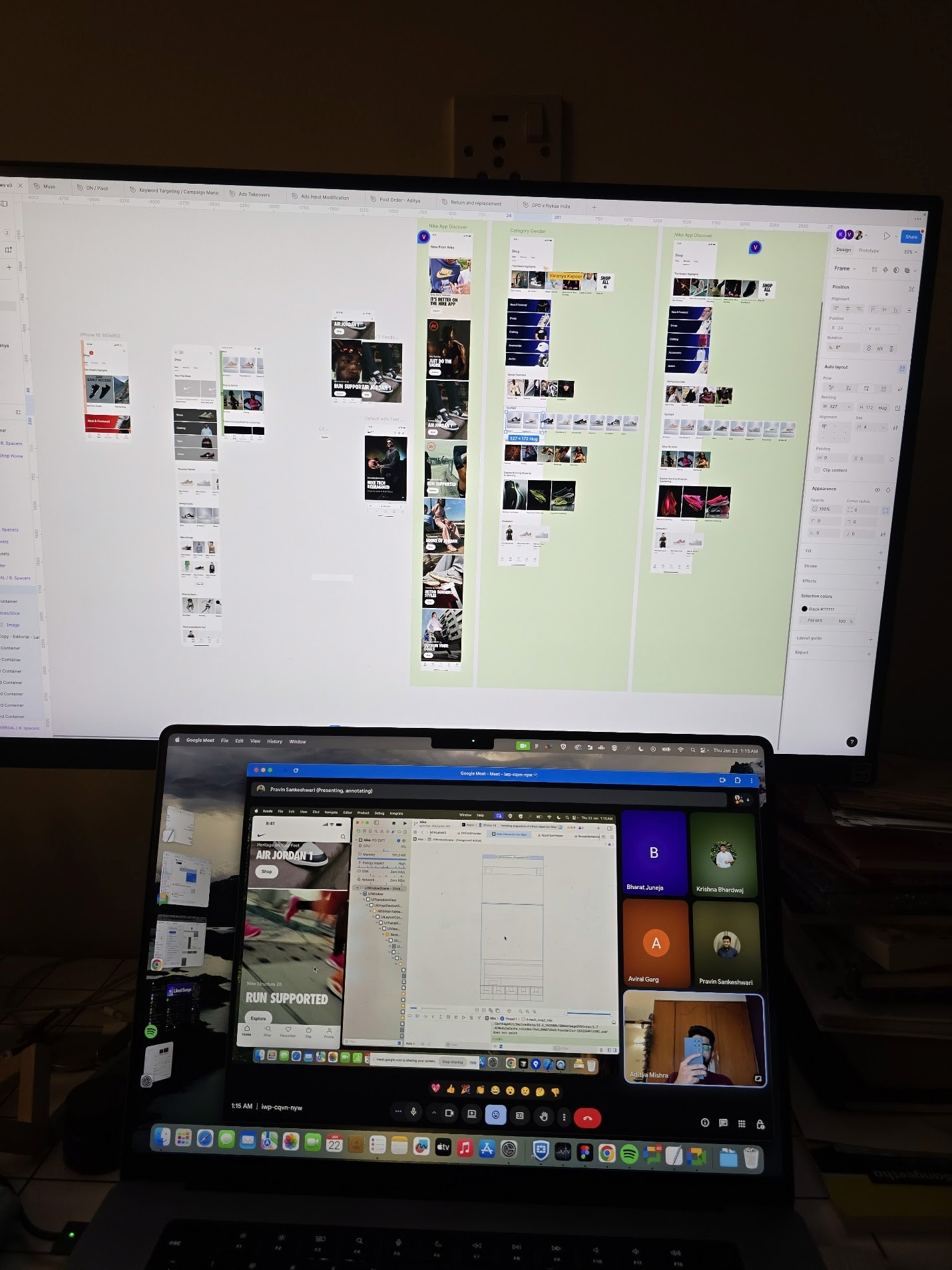
The home and shop pages still needed to be built — from scratch — in strict accordance with Nike's global design guidelines. And we had to do it using Nykaa's existing Display Network: a complex, server-driven UI and CMS that I had previously helped develop and knew inside out.
That's when I got pulled in.
Challenge
Brand Rigidity vs. System Constraints
//What are even constraints?
The problem? Nykaa's CMS widgets weren't built to natively support Nike's specific visual requirements. The system had its rules, Nike had theirs — and the two weren't exactly best friends.
To bridge the gap, we had to build and integrate custom features. Practically overnight.
That didn't go down smoothly.
The dev team was already running on fumes. They'd been going full throttle for weeks, and now we were asking them to build custom components they'd never had to build for Nykaa's own brand. The pushback was valid: "If we don't do this for ourselves, why are we doing it for Nike?"
It took convincing. Real convincing — not just a Slack message. But eventually, every stakeholder agreed: design is not to be compromised. We built everything needed for the release.
My Role
Designer, PM, Executioner
//Spider Man
With great power comes great responsibility. And I happened to be the only designer who knew the Display Network in and out.
My title says Product Designer. But for these two weeks, I was operating at the intersection of design, product management, and straight-up execution. Here's what that actually looked like
Navigating Team Fatigue — With Empathy, Not Pressure:
The team was exhausted. Genuinely. A few inconsistencies had already been let go of in other parts of the app — because sometimes you have to pick your battles.But the home and shop pages were different. No room for compromise. Nike's guidelines for these pages were contractual, not just aesthetic.
Instead of dumping a requirements doc and walking away, I sat down with the engineers — one conversation at a time — and walked them through why each detail mattered. What looks like a designer being picky about padding is actually a brand obligation baked into a partnership agreement. Once they understood that, the resistance softened. Getting their buy-in was just as important as the build itself.
Deep System Expertise:
This is where knowing the Display Network inside out became the actual superpower. I managed the parameters, image uploads, and recommendation logic myself — ensuring the CMS could handle the incoming scale without breaking Nike's visual standards at any point.Cross-Functional Orchestration:
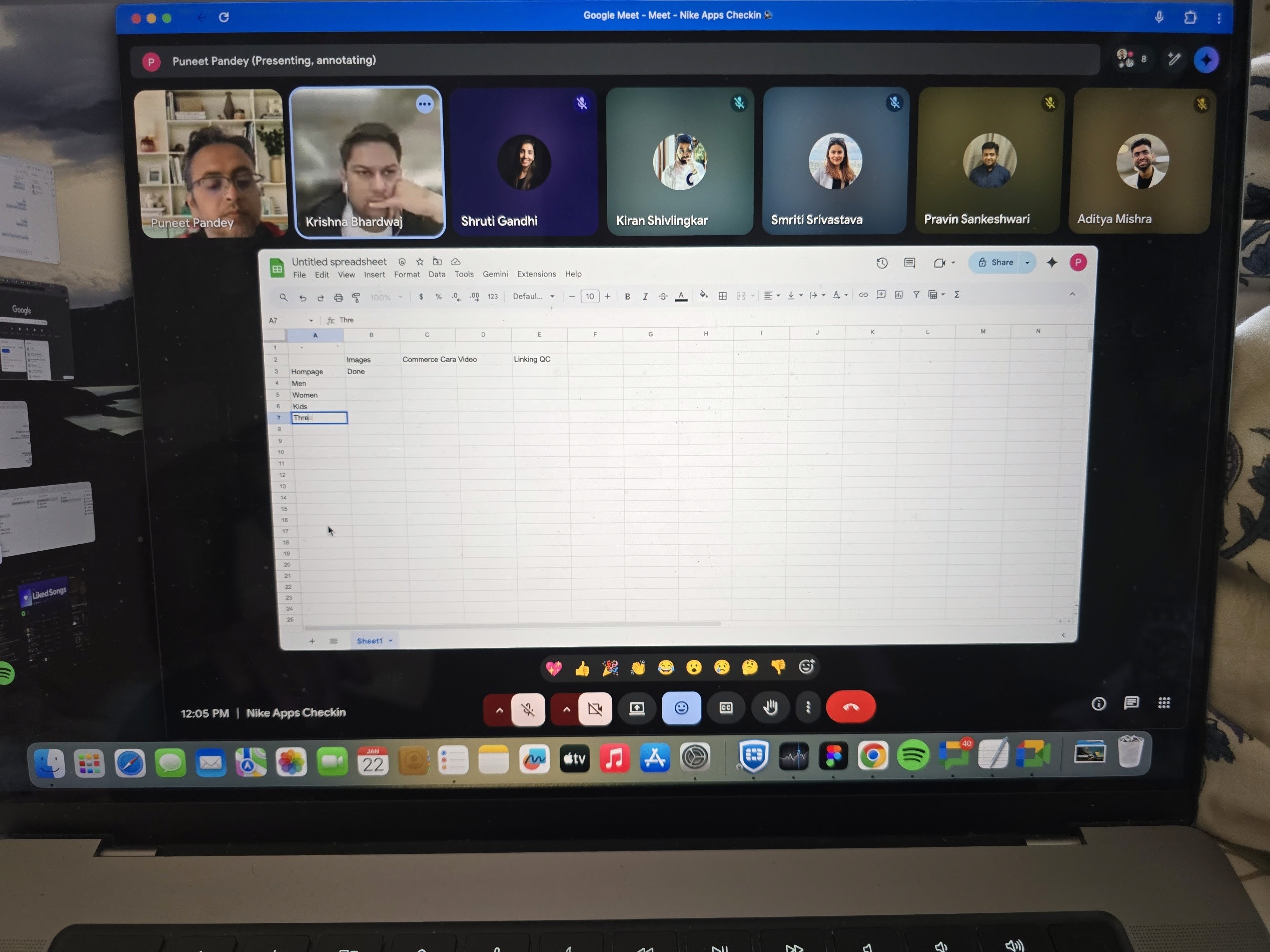
At any given moment, I was the bridge between Product, Business, Marketing, and Catalogue teams — from both Nike and Nykaa. Making sure the right information was flowing to the right people, and nothing slipped through the cracks.Extreme Ownership:
For two weeks straight, I was working late nights alongside developers and director-level stakeholders. Together with Varanya Kapur, I took end-to-end ownership of the final output — from gathering marketing requirements all the way to conducting the final QC and UAT before go-live.
Dream Team
A Masterclass in setting up an app from scratch
01
Product
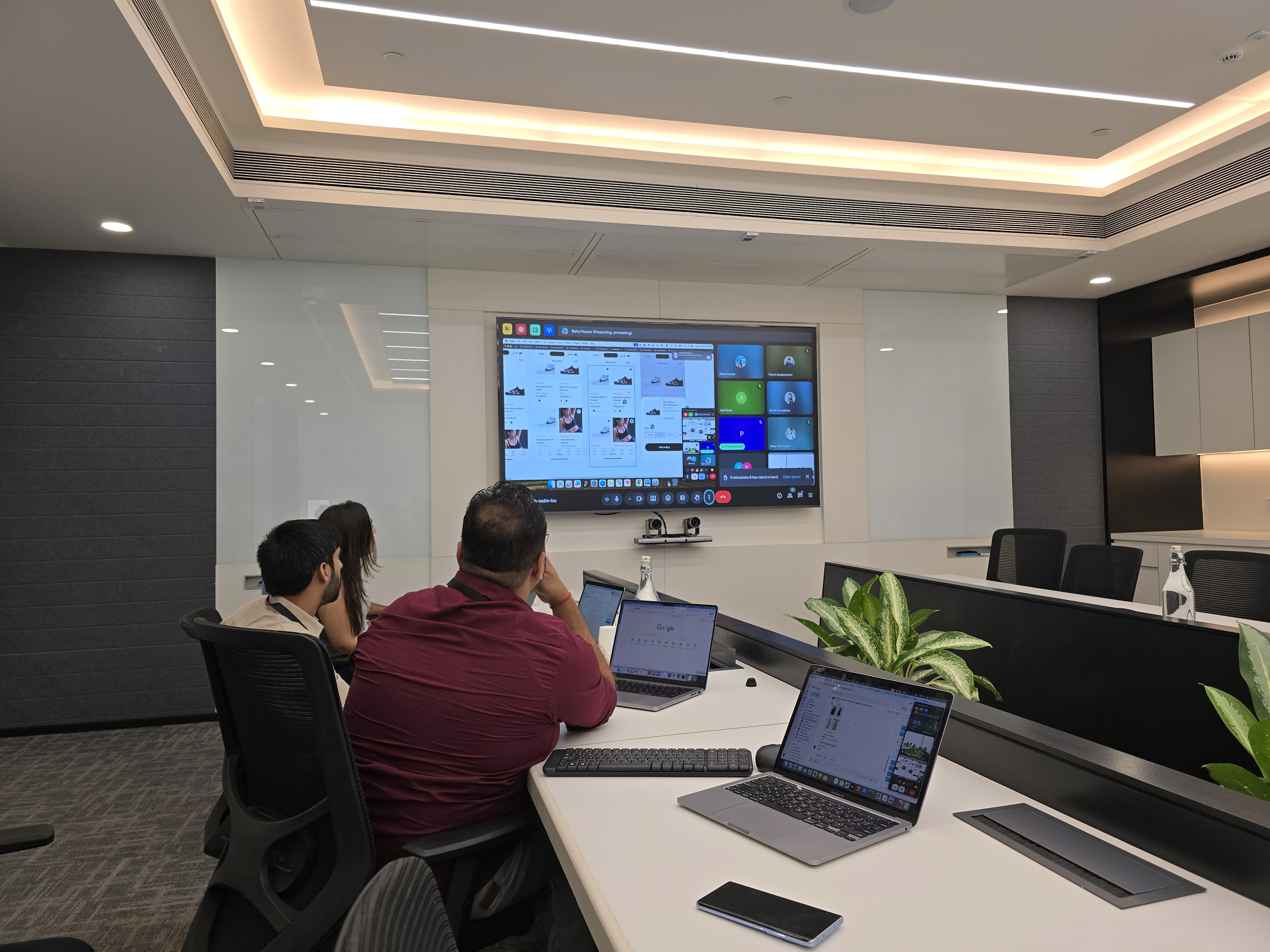
The PMs on this project carried an insane amount of coordination weight. Scoping what could realistically go live, negotiating with the Nike team, managing expectations across the board — it was a mammoth effort, and they made it look almost effortless.
02
Design
Building the Nike India app from scratch was a shared effort across a pod of 6–8 designers. While my peers meticulously crafted the core app infrastructure — onboarding, payment flows, PLPs, PDPs — my domain was global navigation, homepages, and shop pages.
The homepage was one of the highest-stakes pieces. It was Nike's primary entry point, the face of the app, and the place with the most rigid brand requirements. The go/no-go decision for the entire launch hinged on whether this final leg was executed right — taking everything the design team built and making it live inside our complex CMS, pixel-perfect and ready to scale.
03
Engineering
While the design team was sweating over pixels, the engineers were quietly doing something remarkable on the web side — they cloned the entire Nike web experience at a speed that, honestly, I still don't fully understand. I didn't get into the details, but I know it happened fast. And I'm sure that early win did a lot to boost Nike's confidence in us as a partner.
Under the hood, the team rebuilt a significant amount of the app while keeping the core engineering stack and backend architecture intact. No shortcuts that would haunt us later. Just smart, deliberate decisions made at speed.
What really stood out to me though — was the people.
Some engineers were innovating on their own. No one asked them to find a better way. They just did. Others were the opposite — laser-focused on execution. "You tell us what to do, and we'll figure out how." That phrase kept me calmer than I'd like to admit during those two weeks.
QC was intense. A lot of time went into it — and nobody complained. Things were documented well, which made the process smoother than it had any right to be. Nike was running their own QC in parallel from their end, and when they flagged something, the devs just... fixed it. No defensiveness. No back-and-forth. Just ownership.
And when things went wrong — because things always go wrong — they kept their cool, stayed up, and got it done.
That kind of energy is rare. This team had it in abundance.
04
Catalogue, Legal, etc.
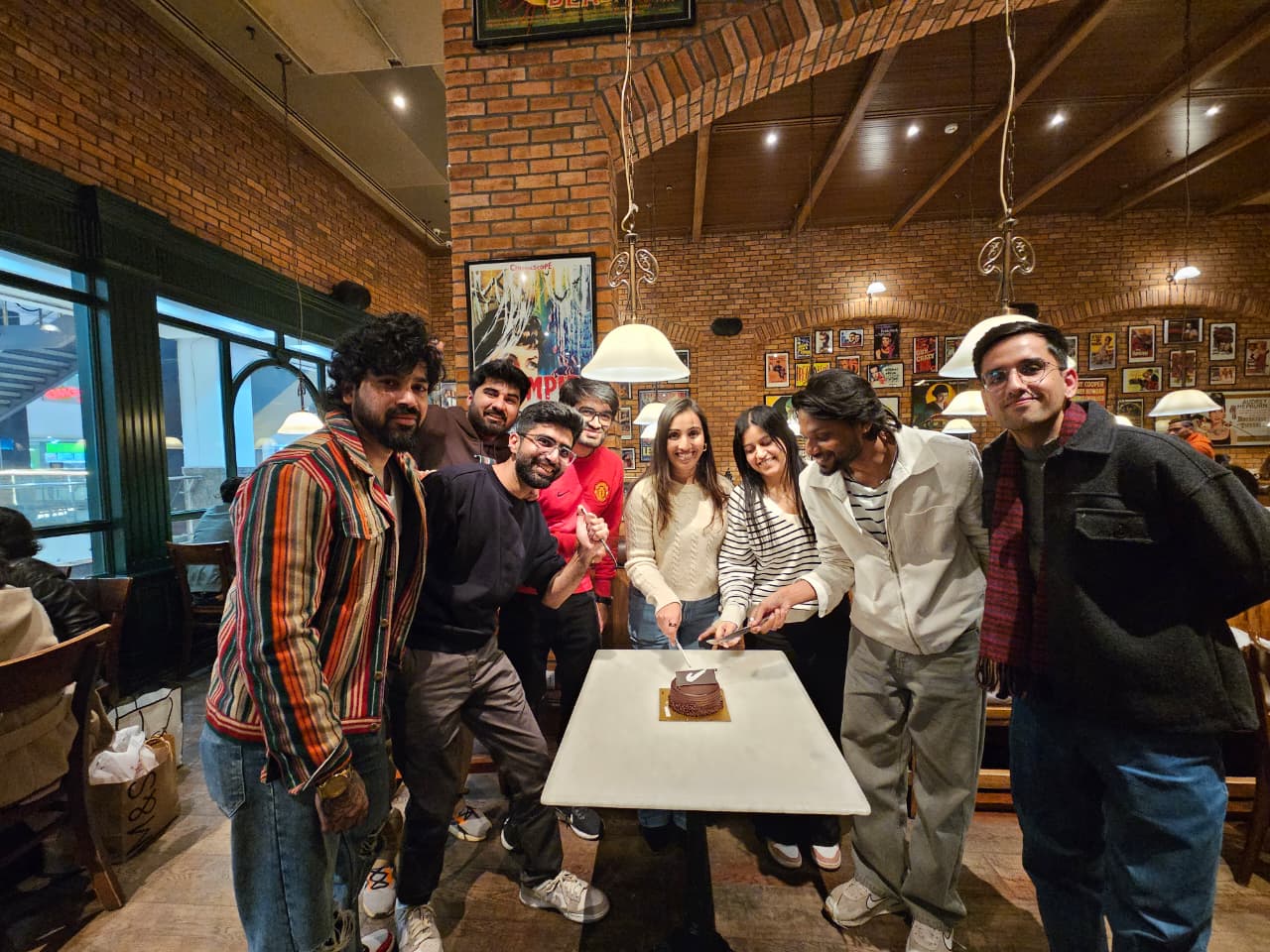
2,000 SKUs. Every single one had to be correctly tagged to the right category.
That's not glamorous work. There's no design award for it, no one's putting it in a case study thumbnail. But if even a fraction of those tags are wrong, the entire shopping experience breaks — and Nike notices.
The catalogue team just... got it done. Methodically, patiently, without drama.
What struck me most was how they handled the coordination with Nike's team. Nike had opinions. Nike had standards. And the catalogue team met every round of feedback with the same energy — reassuring, steady, and completely unwavering on delivery. The timeline never moved. Not once.
As for Legal — I genuinely couldn't tell you much. Which, in hindsight, is probably the best thing I can say about them. When legal is loud, something's on fire. I heard nothing. They handled whatever needed handling quietly and kept things moving.
Full disclosure — by the time this phase was in full swing, I was running on fumes myself. Head down, deep in the CMS, losing track of time zones. I probably missed a lot of what these teams were navigating. But the fact that none of it ever became my problem? That says everything.
Learning
I saw a Real Life Hackathon to Make a Business Go Live
01
Constraints don't exist
Before this launch, I'd heard "that's a constraint" more times than I can count. Timelines, priorities, existing systems — all valid reasons to not do something.
Nike changed that narrative overnight.
The moment a global brand with a strict partnership agreement said "this needs to happen," everything that was previously impossible suddenly got done. Rules were bent. Custom components were built. The entire org shifted from corporate to startup mode — fast, scrappy, and fully committed.
Constraints aren't real. They're just priorities waiting to be reshuffled.
02
You can't impress everyone. Stop trying.
Only the people who were in the trenches with you will ever truly see what you put in. The late nights, the edge cases you caught, the fires you quietly put out — most of it goes unnoticed by people who weren't there.
And that's okay.
You don't need to justify your effort to people who weren't in the room. The ones who were — they know.
03
Patience is the real skill.
Everyone was running on fumes. Sleep-deprived, stretched thin, one bug away from losing it. Morale was the only currency that still mattered.
I'll be honest — there was a point where I wasn't being empathetic or appreciative enough with the dev team. And they got pissed. Rightfully so.
On the flip side, I also had a dev team that was being flat-out rude. My instinct was to push back. But I made a call — the launch mattered more than my ego. I set it aside, kept my patience, and kept things moving.
That was probably the most uncomfortable thing I did during those two weeks. And the most important.
04
When the entire org is aligned, everything is possible.
At one point someone asked me, "What do you need?"
I told them. And I got it. Engineers, the Display Network team, designers — all at my disposal. Resources showed up because leadership had decided this launch was the priority, full stop.
I'd never seen that kind of org-wide alignment before. It's rare. And when it happens, the results speak for themselves.
05
And honestly? It was fun.
Stressful beyond belief. But working like a PM — orchestrating people, making calls, owning outcomes — I genuinely enjoyed it. It's a side of the job I didn't know I liked until I was thrown into it headfirst.
Would I do it again? Ask me after a full night of sleep.